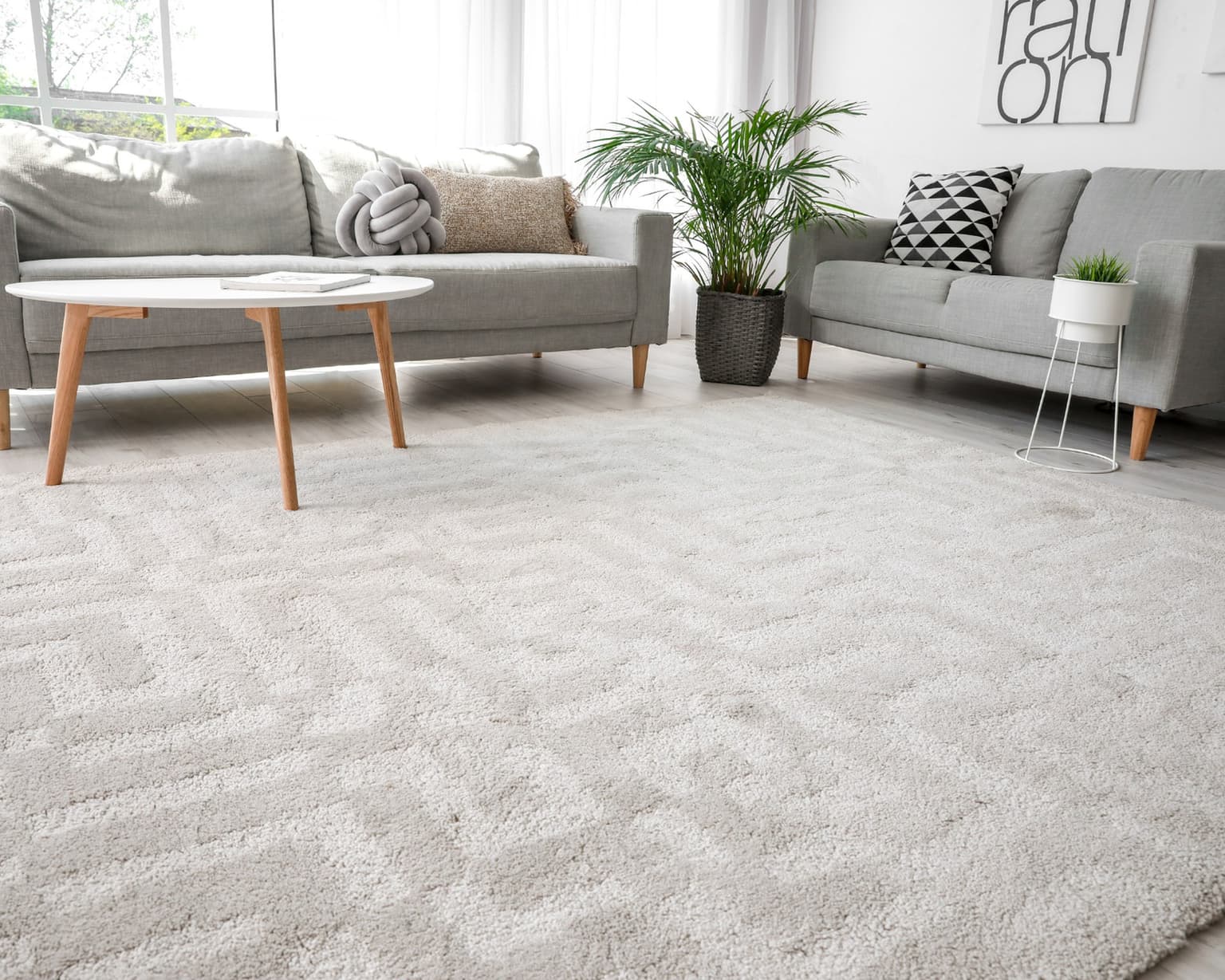
An area rug does two jobs. It anchors a room, and it quietly absorbs a year of whatever lands on it. The one under the kitchen table fills with crumbs and the grit kicked loose every time a chair drags out. The runner by the front door catches the worst of what comes in on everyone's shoes, which around Fort Worth means cedar pollen all winter, ragweed in the fall, and the fine clay dust that blows across Tarrant County on a dry, windy week. Even a rug in a quiet den is collecting skin cells, dust, and whatever the vents stir up. A vacuum only skims the top. Our area rug cleaning in Fort Worth, TX reaches the soil pressed into the foundation of the rug, and it gets there without drowning the fibers or leaving anything behind.
The rugs we see run the full range, from machine-made synthetics holding down a playroom in a Keller new build to hand-woven wool pieces that traveled a long way and meant something to somebody, to flat-weaves laid over the hardwood in older homes near the Cultural District. We've cleaned rugs for over thirty years, and the carbonating low-moisture system is gentle enough for a delicate natural fiber yet strong enough to drive packed grit out of a hard-used synthetic. No detergent, no soaking, no two-day wait to dry.
Why the dry step comes before anything wet
This is the part that separates a rug cleaning from a rug ruining. A piece that's spent a year on the floor can carry several pounds of fine grit packed into the base of the pile, and wet-cleaning before that comes out is basically dragging sandpaper through the fibers in muddy water. So before any moisture goes near it, we identify the rug, wool, cotton, silk, viscose, nylon, jute, polypropylene, or a blend, and check how it was built, whether it's hand-tufted over a latex backing, flat-woven like a dhurrie, or off a machine loom, since each asks for a different touch. We test a hidden corner for colorfastness. Then we agitate and vacuum the dry debris out. The amount that comes up at this stage tends to surprise people.
Spot work, then the carbonating clean
With the dry soil gone, a biodegradable, soap-free pre-spray reaches what dry extraction left behind, and worn lanes and visible stains get handled one at a time. Pet spots get an enzyme treatment that digests the organic mess rather than laying perfume over it.
The carbonating clean then does the main lift, freeing soil from the fiber on roughly a tenth of the water a steam cleaner would push in. On a rug, that restraint is everything, since too much water moves dyes, shrinks wool, and warps a backing. We can add an enzyme deodorizer for odor and a hypoallergenic treatment that knocks down the dust-mite allergens nesting in the pile. Strong extraction pulls the loosened soil and solution back out, and because we started with so little water, the rug is dry in about an hour. No soaked rug sitting on your floor overnight. We finish by setting the pile flat, then go over the whole thing with you and rework any spot that didn't fully let go.
What you're actually protecting
The thing that wears a rug out isn't foot traffic. It's the sand and grit packed into the base, working like a bed of tiny blades that nick the fibers with every step. Drawing that abrasive material out before it cuts the rug apart from within is why regular cleaning pays for itself, and on a quality piece the cost is a fraction of a replacement.
There's an air-quality side too, because a rug filters the room the same way carpet does. It traps dust, pollen, dander, and mold spores as they settle, and once the pile is full, foot traffic starts knocking those particles back up into the room. A real cleaning empties it again, which busy Fort Worth households with the windows shut and the AC running all summer notice fast.
And there's the residue problem, the reason a rug you scrubbed by hand can look worse two weeks later than before you started. Soap-based cleaners leave a film, and that film snags new dirt the instant the rug goes back down. Our carbonating system leaves nothing in the fiber to do that. Since we skip the soaps, detergents, and synthetic fragrance, there's no reason to keep kids or pets off the rug while it dries.
Skilled with every fiber
The crew is certified, insured, and seasoned with everything that comes through Fort Worth homes, machine-made synthetics to handmade wool and silk. We work by wool-safe approved methods, with a 100% satisfaction guarantee behind every job. With no soap residue, the fibers don't attract new dirt, so rugs cleaned our way stay fresh up to four times longer between visits, and the low-moisture method dries up to eight times faster than steam cleaning, so the room is back in use the same day.
Most rugs get cleaned right where they sit. If a piece needs deeper restoration or has damage that takes more time, we can take it with us and return it once it's ready, so you're not hauling it around in the back of a car.
We serve Fort Worth, Arlington, Mansfield, Keller, Southlake, Grapevine, the Mid-Cities, and the surrounding Tarrant County area. If you own a hand-knotted Oriental or Persian piece, our oriental rug cleaning page covers how we handle those. A lot of customers add carpet cleaning or upholstery cleaning to the same appointment.
Frequently asked questions
Could this shrink my rug or bleed the dyes? Not with our method. We test colorfastness up front, and the low-moisture process sidesteps the overwetting that causes shrinkage and dye migration to begin with. That's the main reason it's our choice for the fragile pieces.
How is this different from steam cleaning a rug? A steam clean drives in a heavy load of water with detergent on top, and on certain rugs that combination shrinks the fiber, bleeds the dyes, and warps the backing. We use a fraction of the water and no soap, which is gentler on delicate pieces and dries them far faster.
Can the kids and pets be around while you work? Yes. The solutions are hypoallergenic, non-toxic, and free of soaps, detergents, and artificial fragrance. Everyone can stay in the room, and they're back on the rug the second it dries.
How often should rugs get cleaned? For most homes, every twelve to eighteen months, shifting toward every six to twelve with pets or heavy traffic. The entry runner and the rug under the dining table need it more often than one in a quiet bedroom.
Will old pet stains and smells come out of a rug? Usually. Enzyme treatments break pet urine and other organic stains apart at the source. For heavy damage, we can combine the cleaning with our odor and stain removal service for a deeper result.
How soon can the rug be used again? About an hour of drying after we finish, so it's walkable the same day rather than out of commission overnight.
Book your rug cleaning
Call 682-207-4287 or book online. We serve Fort Worth, Arlington, Mansfield, Keller, Southlake, Grapevine, Weatherford, and every area on our map. Not sure which service your rug needs? Describe it when you call and we'll point you the right way. Booking runs 24/7. Check the coupons page before you schedule.